


How to Reduce Lifting Injuries in Your Workplace
- MI Team Training

- Aug 10
- 6 min read
A delivery arrives, a classroom is being rearranged, or a care worker needs to help someone move safely. These are ordinary parts of working life, but they can cause lasting harm when a load is heavier, more awkward or more rushed than expected. Knowing how to reduce lifting injuries is therefore not just about showing people the right posture. It is about planning work so that unsafe lifting is less likely to happen in the first place.
Back pain, strains and sprains can lead to absence, reduced confidence and difficulty carrying out normal duties. For employers, they can also expose gaps in risk assessment, supervision and training. A practical approach protects people while helping work continue safely and efficiently.
Start by avoiding the lift where possible
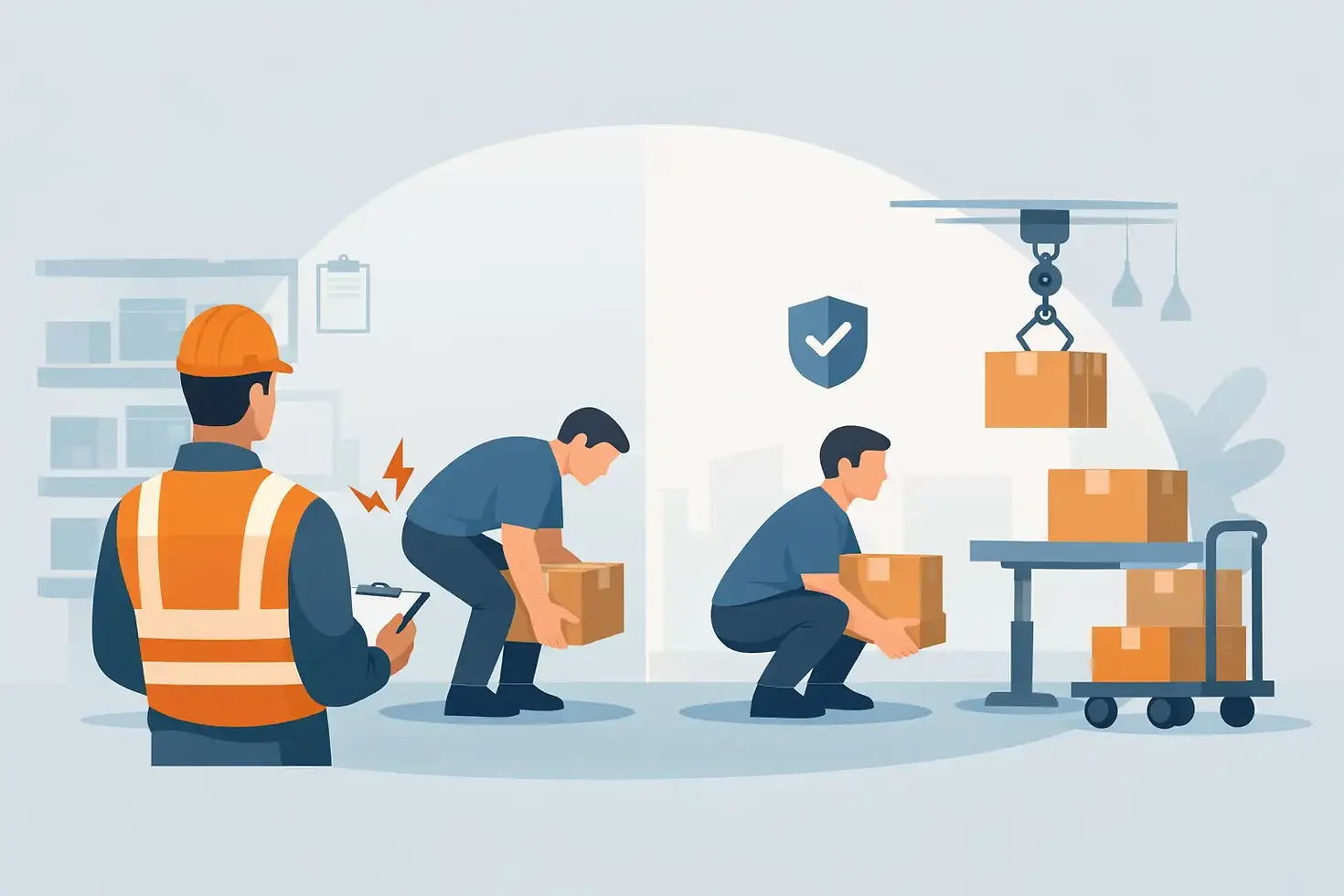
The safest manual handling task is often the one that does not need to be carried out manually. Before asking somebody to lift, move or support a load, consider whether the item can be delivered closer to where it is needed, stored at a better height or moved using equipment.
A trolley, sack truck, pallet truck, lifting aid or wheeled container may remove much of the physical demand. In a care setting, appropriate hoists, transfer aids and individual moving and handling plans are essential. Equipment only helps when it is suitable for the task, maintained, available when needed and staff are confident using it.
Workplace layout makes a real difference too. Narrow routes, cluttered storage areas, uneven flooring and blocked exits turn a manageable carry into a higher-risk task. Arrange regular-use items between knee and shoulder height where possible, keep routes clear, and avoid creating a process where staff repeatedly twist, reach or carry items over long distances.
Under the Manual Handling Operations Regulations 1992, employers should avoid hazardous manual handling so far as is reasonably practicable. Where this cannot be avoided, the task must be assessed and the risk reduced. This is a useful order of thinking: remove the need to lift first, then reduce the remaining risk.
Assess the task, not just the weight
A box can be relatively light and still cause an injury. It may be bulky, difficult to grip, hot, unstable or carried in a cramped space. Equally, a heavier object may be moved safely with the right equipment, route and number of people.
A good manual handling assessment considers four connected areas:
Task: Does it involve bending, twisting, carrying distance, repetitive movements, pushing, pulling or awkward timing?
Individual: Does the person have the capability, experience, health considerations, suitable clothing and footwear for the task?
Load: Is it heavy, large, difficult to hold, unevenly balanced, sharp, fragile or likely to move?
Environment: Are there stairs, poor lighting, limited space, wet floors, temperature extremes or obstructions on the route?
This approach is often known as TILE. It should lead to practical changes, rather than a form that is filed away and forgotten. For example, a risk assessment may show that stock should be split into smaller containers, that deliveries need to be scheduled when two trained colleagues are available, or that a storeroom needs shelving and clearer walkways.
Review assessments when something changes. New equipment, a different supplier, altered premises, staff feedback, an incident or an employee returning after injury can all affect the level of risk.
How to reduce lifting injuries with safer technique
There is no single perfect lifting posture for every task. People have different body shapes, loads vary, and some work needs pushing, pulling or controlled lowering rather than a straightforward lift. However, a few principles are widely useful.
First, pause and plan. Check the weight and stability of the load, identify where it is going, clear the route and decide whether assistance or equipment is needed. Test an unfamiliar load by gently moving it before committing to the lift. If it feels too heavy or unbalanced, stop and change the plan.
Stand with a stable base, with feet apart and one foot slightly ahead when this helps balance. Get close to the load and keep it close to your body throughout the movement. Bend at the knees and hips as needed, maintaining a natural back position rather than sharply rounding or over-arching it. Use the legs to drive the movement, avoid twisting the torso, and turn by moving the feet.
A secure grip matters. Gloves may improve grip for some tasks, but they need to be appropriate for the work and should not make handling small items more difficult. Keep fingers clear of pinch points and never put hands beneath a load being lowered onto a surface.
Move smoothly. Sudden jerks place extra demand on muscles and joints, especially when a load is awkward. When lowering, keep control until the load is supported. Do not stretch to place it at the far side of a bench or shelf - step closer or reposition first.
These principles are not a substitute for reducing the load or using equipment. Asking a person to lift a heavy, awkward item with better technique alone does not make the task safe.
Be careful with team lifts
A two-person lift can be useful, but it is not automatically the answer. It can create new risks if one person is taller, stronger, less experienced or unable to see where they are going. It is also difficult to coordinate lifting and lowering in a restricted space.
Before starting, agree who will lead the movement, where each person will stand, the route and the destination. Use clear, simple instructions such as “ready, lift” and “lower”. Both people should be able to hold the load securely and move at the same pace. If the item is too large or unstable for safe shared handling, use suitable equipment instead.
In care environments, team handling must always follow the person’s assessed plan and the agreed techniques for that individual. A person is not a load, and their comfort, dignity, communication and changing needs must remain central to every move.
Build safer handling into everyday management
Lifting injuries rarely come down to one poor decision. They often develop where production pressures, poor storage, unavailable equipment or unclear expectations make the unsafe option feel like the quickest option.
Managers and supervisors should make it straightforward for people to report a difficult task, faulty aid, damaged packaging or near miss. A supportive response is vital. If staff think raising a concern will be treated as complaining or slowing work down, risks will remain hidden.
Look for patterns. Are injuries or near misses happening at delivery times, during busy changeovers, on a particular shift or in one area of the building? Are employees regularly moving the same awkward item? Observing the work as it is actually done is often more revealing than reviewing a written procedure alone.
Workload and fatigue should also be considered. Repeated handling over a full shift can create risk even where individual lifts appear manageable. Rotate demanding tasks where practical, allow enough time for safe handling and avoid staffing levels that leave people feeling they must lift alone.
Give staff practical manual handling training
Manual handling training is most effective when it reflects the workplace. Generic advice has a place, but staff also need to practise decisions and techniques relevant to their own loads, equipment, spaces and routines.
Training should explain why risk occurs, how to assess a task, when to stop, and how to use available controls. It should give people the opportunity to practise under the guidance of a qualified trainer, ask questions and correct habits before they lead to injury. Refresher training is particularly valuable after changes to work processes, equipment or staff responsibilities.
For organisations across mainland UK, on-site manual handling training can make this learning more meaningful because the discussion can be linked directly to the team’s environment. MI Team Training supports workplaces with engaging, practical instruction designed to help staff apply safer handling principles with confidence.
Respond early when somebody reports discomfort
A lifting injury does not always begin with a dramatic incident. A person may notice aching, stiffness, tingling or discomfort after repeated handling. Encourage early reporting and take concerns seriously. Early adjustments to duties, equipment or working methods can prevent a minor issue becoming a longer absence.
Follow your organisation’s reporting procedures, investigate what contributed to the discomfort and revisit the relevant risk assessment. Avoid assuming that the answer is simply to tell the employee to “lift properly”. The task, load and environment may all need attention.
Safer lifting is not achieved by posters alone. It comes from giving people the time, equipment, training and permission to make the safe choice. When a worker pauses to get a trolley, asks for help or reports an awkward task, that is not a delay to manage - it is a safer workplace taking shape.


Comments