


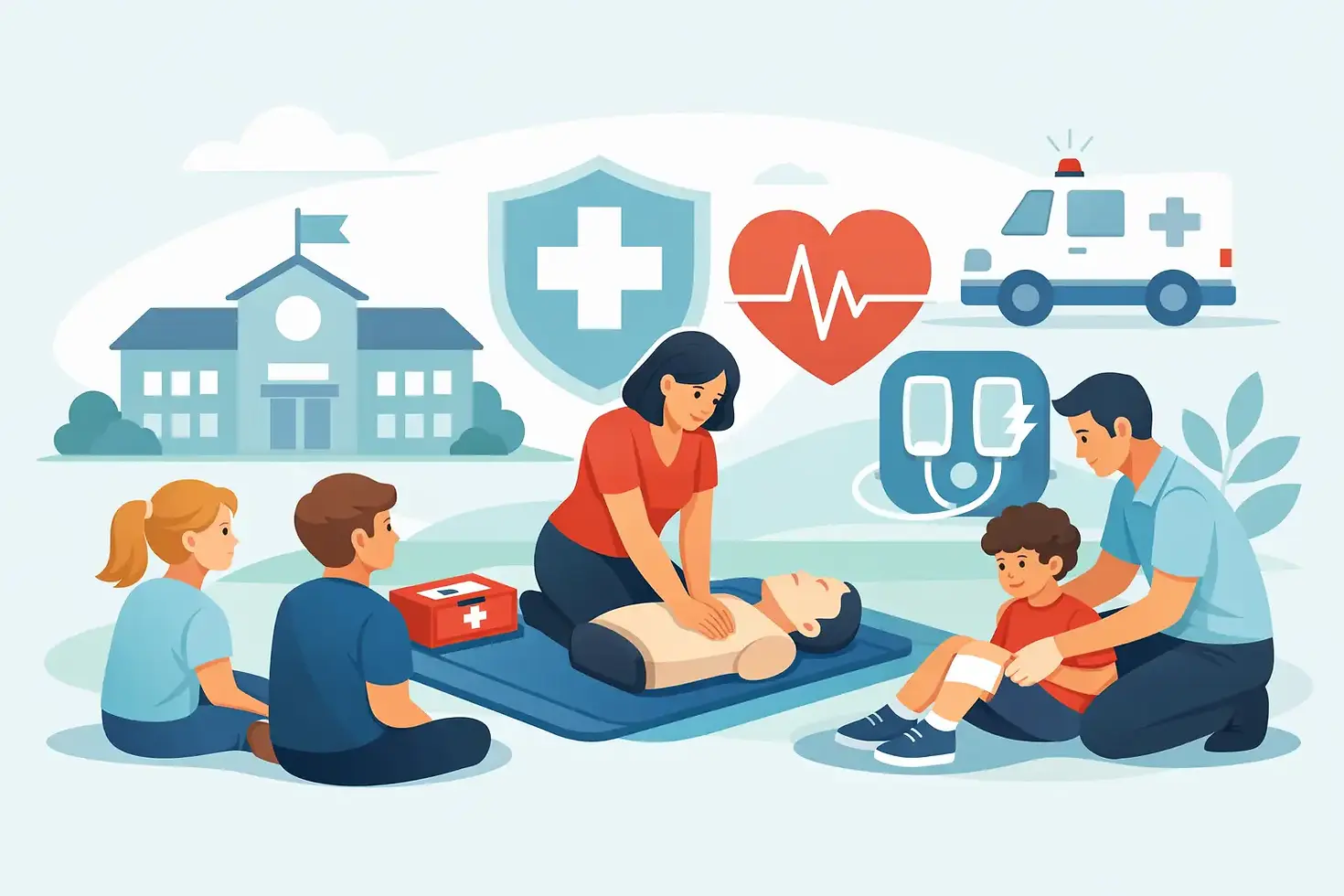
First Aid Training for Schools That Works

A lunchtime fall in the playground. A pupil with a severe allergic reaction. A member of staff taken suddenly unwell in reception. Schools do not get to choose when emergencies happen, which is exactly why first aid training for schools needs to be practical, current and easy for staff to apply under pressure.
For school leaders, this is not just about ticking off a training requirement. It is about making sure the right people can step in quickly, protect pupils and colleagues, and make sensible decisions while waiting for further medical help if needed. Good training also gives staff confidence. That matters more than many settings realise.
Why first aid training for schools needs a school-specific approach
A school is not the same as an office, warehouse or retail site. The risks are different, the pace is different, and the people needing support may be children of very different ages. That changes what effective training looks like.
In education settings, first aiders may be dealing with playground injuries, asthma episodes, seizures, choking, fainting, head injuries, sports incidents or allergic reactions. In some schools, there are also pupils with known medical needs who require a more informed and consistent response. Training needs to reflect that reality rather than relying on generic examples that feel remote from day-to-day school life.
There is also the question of who needs training. It may not only be the designated first aider. Teachers, teaching assistants, lunchtime supervisors, office staff, site teams and wraparound care staff can all find themselves first on the scene. A sensible training plan looks at the whole setting, not just one or two named individuals.
What schools should look for in training
The strongest course is not always the longest one. It is the one that matches your setting, your duties and your risks.
For many schools, a mix of accredited workplace first aid and paediatric content makes sense, particularly where staff work with younger children or mixed age groups. Early years provision, nursery classes and wraparound childcare may have more specific paediatric requirements, while secondary schools may need stronger emphasis on sports injuries, larger site coverage and incident response across wider teams.
Quality matters here. Qualified trainers, regulated accreditation and clear course content give school leaders more confidence that training will stand up to scrutiny and, more importantly, help in a real emergency. Delivery style matters too. If staff spend the day listening passively, they are less likely to remember what to do. The best sessions are engaging, realistic and practical without becoming alarmist.
Compliance matters, but confidence matters too
Schools have legal and safeguarding responsibilities, and first aid sits within that wider duty of care. Most leadership teams already understand that. The challenge is often turning policy into something that genuinely works on a busy school day.
That is where training can either help or hinder. If it is treated as a paperwork exercise, staff may leave with a certificate but little confidence. If it is delivered well, people understand the basics of assessment, know how to prioritise action, and are more likely to stay calm.
There is a balance to strike. Not every member of staff needs the same level of qualification, and overtraining the wrong people can be an expensive way to solve the wrong problem. On the other hand, training too few people can leave obvious gaps during trips, absences, breaktimes or after-school activities. It depends on your staffing structure, site layout and the age range you support.
Which school staff may need first aid training?
The answer varies by setting, but most schools benefit from thinking beyond a single first aid lead. Class teachers may need awareness and immediate response skills. Support staff often supervise children in less structured parts of the day, where incidents are common. Office teams are frequently the first point of contact for visitors, contractors and unwell pupils brought to reception.
Educational visits are another factor. If staff regularly take pupils off site, your training needs may be different from those of a school where activity stays mainly on the premises. Sports provision, forest school, swimming and extracurricular clubs can all increase the need for broader emergency preparedness.
This is why many education providers prefer on-site delivery. Training the team together allows content to be discussed in the context of the actual setting, daily routines and known risks. It also reduces disruption, since staff do not need to travel out to a separate venue.
Common course options for education settings
Schools do not all need the same course, and this is often where decisions become muddled. A good provider should help you match the training to your environment rather than pushing a one-size-fits-all option.
Emergency First Aid at Work can be suitable where staff need a recognised introduction to essential adult first aid skills. First Aid at Work offers broader coverage for settings with higher risk, larger teams or a need for more comprehensive capability. Paediatric first aid is particularly relevant for nurseries, early years teams and those working closely with younger children. Annual refresher training can help prevent knowledge from fading between full qualifications.
Some schools also benefit from additional focused sessions, such as AED and basic life support, anaphylaxis awareness, or activity first aid where sport and outdoor education are central parts of school life. If your setting supports pupils with severe allergies, for example, anaphylaxis training is not an optional extra to leave vague.
How often should training be refreshed?
Certificates have their own validity periods, but practical confidence can drop much sooner. Staff forget steps, mix up priorities or lose the habit of acting decisively if they have not revisited the material for some time.
That is why refresher training is worth taking seriously. It helps staff retain the essentials and gives schools a chance to review incident patterns, staffing changes and any gaps that have emerged. A setting that has recently expanded wraparound provision or opened a nursery class may need to rethink its first aid coverage rather than waiting for current certificates to expire.
Refresher sessions also create space to revisit equipment use, such as AEDs, and reinforce how internal reporting, communication and handover should work during an incident. First aid in schools is rarely just about one person helping one casualty. It often involves coordination across staff, parents, emergency services and senior leaders.
Choosing a provider for first aid training for schools
Price matters, but it should not be the only deciding factor. The lowest-cost option can become expensive if the training is generic, poorly delivered or difficult to schedule.
Schools should look for a provider that understands education settings, offers accredited courses, and can deliver practical sessions in a way that keeps staff engaged. Clear communication around booking, certification and course suitability also matters. School business managers and headteachers do not need added uncertainty when arranging statutory or high-priority training.
For many group buyers, on-site delivery is the most efficient route. It keeps training in context, reduces travel time and often works better for inset days or planned staff development. Providers such as MI Team Training support organisations across mainland UK with accredited, on-site training that is designed to be engaging as well as compliant, which is often exactly what schools need.
Making training part of a wider safety culture
Training works best when it is not treated as a once-every-few-years event. Schools that respond well in emergencies usually have a broader culture of readiness around them.
That includes maintaining clear first aid arrangements, checking kits and equipment, making sure new starters know procedures, and reviewing incidents for lessons learned. It also means being realistic. If one trained staff member is always off site on certain mornings, or if after-school clubs rely on a much smaller team, your coverage on paper may not match your coverage in practice.
There is a people element here too. Staff are more likely to respond well when they feel supported and prepared, not judged. Practical, well-delivered training helps remove some of the hesitation that can creep in during real incidents.
A sensible next step for school leaders
If your school has not reviewed its first aid arrangements recently, start there. Look at who is trained, what level they hold, where the obvious gaps are, and whether your current provision matches the pupils, activities and risks in front of you now, not three years ago.
The best first aid training for schools gives more than a certificate. It gives staff the confidence to step forward, do the right thing in difficult moments, and help make school a safer place for everyone who walks through the gate.


Comments