


First Aid Training for Charities That Fits
- MI Team Training

- 3 days ago
- 6 min read
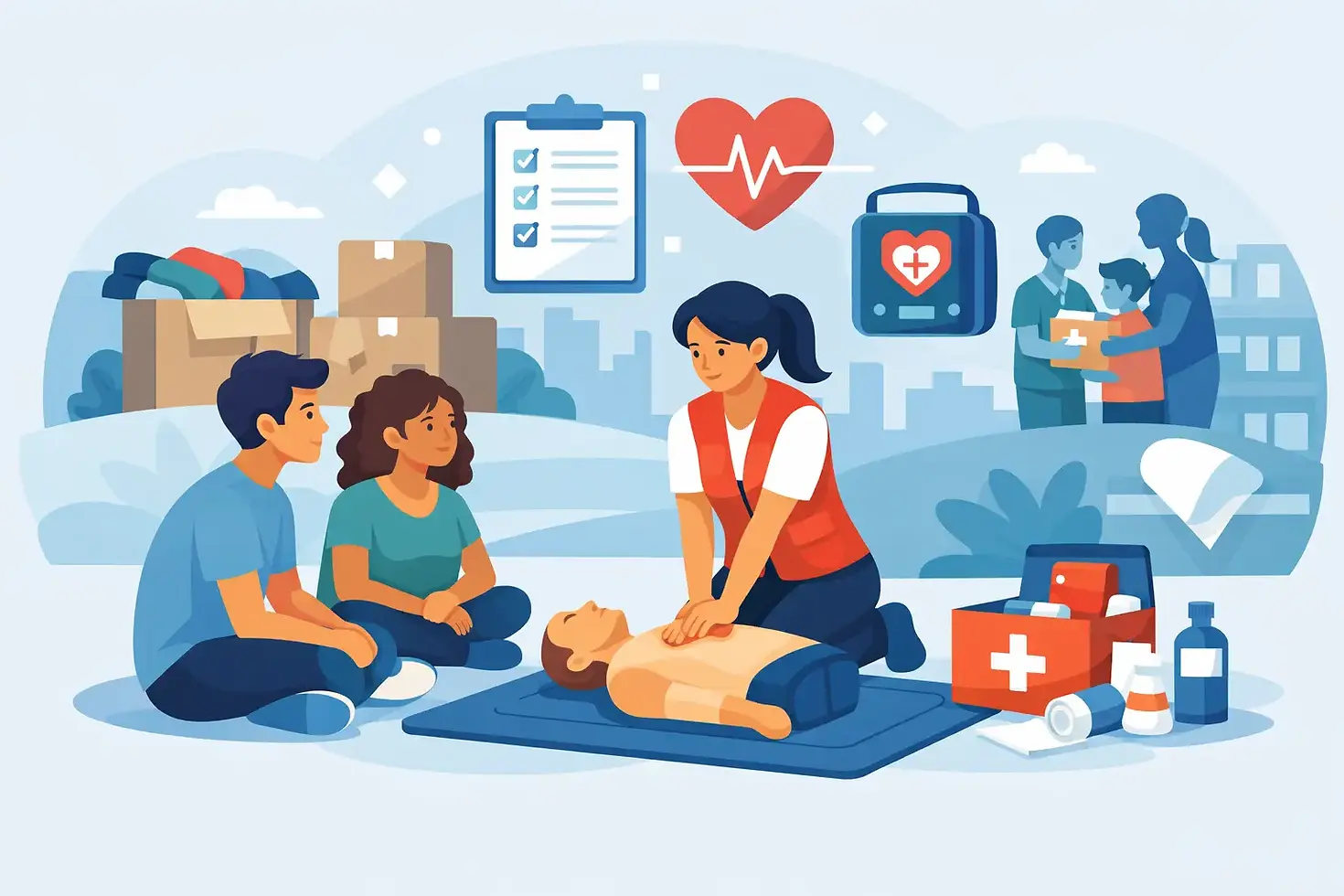
A charity event can go from routine to urgent in seconds. A volunteer feels faint while setting up tables, a child falls awkwardly at a fundraiser, or a service user has a medical episode during a community session. In those moments, first aid training for charities is not a box to tick. It is what helps people respond calmly, protect those in their care and make better decisions under pressure.
Why charities need a different approach
Charities often work in settings that do not fit neatly into one category. One organisation may run an office, manage community outreach, support vulnerable adults, host public events and rely on a mixed team of paid staff and volunteers. That variety affects the type of training needed.
A standard workplace view of risk can miss the realities charities face. Staff and volunteers may be lone working, travelling between sites, supporting children, handling unpredictable public interaction or delivering services in hired venues. In some organisations, the people most likely to be first on scene are not managers at all, but volunteers, project workers or activity leaders.
That is why first aid training for charities works best when it is shaped around actual activity rather than job titles alone. The right course depends on who your people support, where they work and how quickly emergency help could realistically reach them.
What good first aid training for charities should cover
At the very least, training should give people the confidence to assess an incident, keep themselves and others safe, provide immediate assistance and know when to escalate. That sounds straightforward, but confidence only comes when the training is practical and relevant.
For many charities, Emergency First Aid at Work is a sensible starting point. It suits lower-risk environments where an appointed person or basic first aider is needed. It covers the essentials clearly and gives teams a foundation they can use straight away.
For others, that level may not be enough. If your organisation runs busier services, has higher footfall, works with more complex needs or carries out activities where injuries are more likely, First Aid at Work may be the better fit. The same applies if your risk assessment points to a need for more comprehensive cover across a wider range of situations.
If children are involved, paediatric first aid becomes especially important. This is often relevant for charities running family support services, nurseries, youth projects, holiday clubs or parent-and-child groups. Adult and child first aid are not interchangeable, and the right course matters.
Some charities also benefit from more specific training, such as AED and basic life support, anaphylaxis awareness or activity first aid. These options are useful where teams support larger groups, run physical activities or work in settings where a tailored response is more realistic than a one-size-fits-all course.
Compliance matters, but retention matters too
Most charity leaders are balancing duty of care, limited budgets and operational pressure. Naturally, compliance is part of the conversation. You need training that is accredited, properly delivered and appropriate for your level of risk.
But compliance on paper is not the same as capability in practice. A certificate is only useful if learners remember what to do when something happens. That is why delivery style matters just as much as course title.
Training should be clear, engaging and grounded in real situations. People need the chance to ask questions, practise skills and work through scenarios that feel familiar to their role. A volunteer supporting a community café may need different examples from a fundraising team working outdoor events, even if both sit within the same organisation.
The best providers understand that adult learners do not retain much from dry, rushed delivery. Charities in particular benefit from training that respects the experience people bring while giving them practical steps they can actually use.
Choosing the right course for your charity
There is no single course that suits every charity, so the decision usually starts with a realistic look at your work. Think about your main environments. An office-based grant-making charity has different needs from a charity running transport services, food distribution or youth activities.
Consider who you support. If your teams work with older adults, children, people with health conditions or vulnerable groups, your first aid needs may be broader. The same applies if incidents are more likely to involve falls, seizures, allergic reactions or mental and physical distress occurring together.
Then look at staffing. Do you have enough people trained across shifts, locations and events? Many charities assume they are covered because one or two staff members hold a certificate. In practice, cover can disappear quickly through annual leave, sickness, turnover or reliance on part-time teams.
This is where on-site group training can make things easier. Instead of sending individuals to different venues on different dates, organisations can train teams together in a way that reflects their day-to-day setting. That can be especially helpful for charities with tight rotas, dispersed staff or a high proportion of volunteers.
The budget question charities cannot ignore
Cost is a real factor for charities, and it should be. Every spend decision is weighed against service delivery. Still, choosing on price alone can create problems later.
Cheaper training is not always better value if it is poorly pitched, inconvenient to arrange or too generic to support your actual risks. If staff and volunteers leave unsure of what to do, the organisation may end up paying again for refreshers or dealing with avoidable confusion during an incident.
Better value usually comes from asking slightly different questions. Is the course accredited? Is it suitable for your environment? Can it be delivered on-site to reduce disruption? Will the provider help you work out which qualification is appropriate rather than pushing the longest course available?
There is also a practical savings point here. Training a team together can reduce travel time, simplify administration and make it easier to maintain consistent standards across the organisation. For charities operating across mainland UK, an on-site provider can be particularly useful where getting staff and volunteers to external venues would be costly or unrealistic.
Volunteers, temporary teams and refresher needs
Charities often rely on a changing mix of people. New volunteers join before major appeals, event staff come in seasonally and project funding can shift team structures quickly. That makes first aid planning an ongoing task rather than a one-off purchase.
Regular refreshers help keep knowledge current. They also give experienced staff a chance to revisit practical skills that can fade over time. Even where a formal requalification is not yet due, annual refresher training can make a noticeable difference to confidence and response quality.
It is also worth thinking about role-specific gaps. A shop volunteer may only need awareness of emergency procedures and who to call on site, while a community support worker or activity lead may need fuller first aid capability. Not everyone needs the same depth of training, but everyone should know their responsibilities.
What to look for in a training provider
A good provider should make the process clearer, not more complicated. They should be able to explain the differences between courses in plain language, ask sensible questions about your setting and recommend training that matches your level of risk.
Qualified trainers and regulated courses matter, of course. So does delivery quality. Charities need training that is professional without being stiff, and practical without being careless. If learners feel talked at rather than involved, the outcome is weaker.
It also helps to work with a provider that understands group delivery. Charity teams often include people with mixed experience levels, from senior managers to occasional volunteers. The session needs to keep everyone engaged while still meeting the course requirements properly. That balance is not automatic.
Providers such as MI Team Training focus on making accredited first aid training engaging, enjoyable and effective, which is often exactly what charities need when they are training mixed teams with varied responsibilities.
First aid as part of a wider safety culture
For charities, first aid should not sit in isolation. It connects to safeguarding, risk assessment, lone working, event planning and staff wellbeing. Organisations are stronger when these areas support each other.
That does not mean every charity needs extensive training in every topic. It means first aid decisions should reflect how your organisation actually operates. If your people face emotionally difficult situations as well as physical incidents, mental health awareness may sit alongside practical first aid skills. If your services involve lifting, movement or community transport, manual handling and emergency response may need to be considered together.
When training is planned this way, it becomes more than compliance. It supports confidence, consistency and a safer experience for staff, volunteers and the people who rely on your services.
A well-chosen first aid course will not remove every risk from charity work. What it can do is give your team the knowledge to respond well when something goes wrong, and that is one of the most practical investments any charity can make.


Comments